About Borasu Pass
Borasu Pass is located near the border to Uttarakhand and Himachal Pradesh. The pass is open to the public only for a couple of months before the rainy season and a few months before the winter shrouds the region under heavy snow.
In order to reach Borasu Pass one needs to trek 3-4 days from the Har Ki Dun valley and Borasu Glacier. Trekking in the north direction, one reached Morinda Gad or Tal which is just 3 kms from Har Ki Dun. After continuing on the path for further 5 kms along the widened trekking trails, one reaches the Baspa valley. Doaria camping grounds are perfect to spend overnight.
Borasu Pass Trekking Guide
The Borasu Pass Trek is one of the most challenging and rewarding high-altitude adventures in the Indian Himalayas, offering trekkers an extraordinary journey through remote valleys, pristine alpine landscapes, ancient villages, and towering mountain peaks. Connecting the beautiful Har Ki Dun Valley in Uttarakhand with the picturesque Baspa Valley of Himachal Pradesh, this expedition is a dream trek for experienced adventurers seeking an authentic Himalayan wilderness experience.
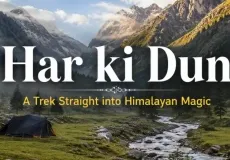
One of the major highlights of the trek is the legendary Har Ki Dun Valley, often referred to as the "Valley of Gods." Surrounded by snow-clad mountains and dotted with traditional Himalayan villages, this ancient valley offers stunning landscapes and a glimpse into the region's rich cultural heritage. Along the route, trekkers encounter scenic landmarks such as Marinda Tal, a beautiful alpine lake nestled amidst rugged mountains, and the expansive meadows of Sauni Bhera, which provide ideal camping locations surrounded by breathtaking natural beauty.
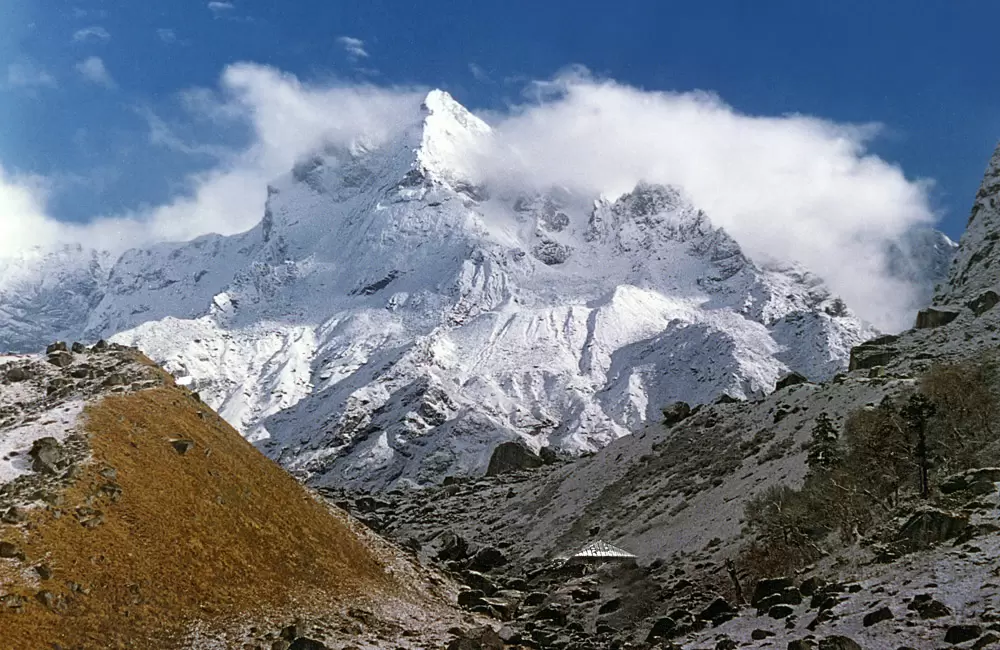
As the trail climbs higher toward the Borasu Pass Base Camp, the terrain becomes increasingly dramatic, with vast glaciers, rocky moraines, and panoramic mountain vistas creating a true sense of Himalayan adventure. Standing at an elevation of over 5,400 meters, Borasu Pass offers an unforgettable experience and spectacular views of the surrounding peaks and valleys. Crossing the pass is both physically demanding and immensely rewarding, making it a memorable achievement for every trekker.
Beyond the pass, the landscape gradually transforms as the trail descends toward Bonga Camp and eventually reaches the beautiful Baspa Valley. The journey concludes in the charming village of Chitkul, known as the last inhabited village near the Indo-Tibetan border. Surrounded by majestic mountains, lush meadows, and traditional wooden houses, Chitkul provides the perfect ending to an epic Himalayan expedition.
Why you should go for Borasu pass trek
- The Borasu Pass Trek is a great way to explore the cultures of the Himalayas of Garhwal and Kinnaur both. It will not only take you on a journey of the mind-boggling topography of the Himalayas but also amongst the varied wildlife of Himalayas.
- You will get to see a large variety of mammals and birds such as Wild boar, Indian Crested Porcupine, Yellow-throated marten, Koklass Pheasant, Himalayan Woodpecker, etc.
- You will also see the high altitude mountain peaks like Kalanag, Swargarohini I, II, III and some lower peaks like Har Ki Dun, Hata peak, etc. The jewel blue rivers that flow in this area are the Tons, Yamuna, Supin and Baspa river.
Suggested Itinerary of The Borasu Pass Trek
Day 1: Dehradun to Sankri (1920m)
Distance: 190km, 7 hrs drive
Begin your journey from Dehradun till Sankri, travel via bus or taxi according to your trekking package. Stay in Sankri Village in Meraki Sankri Homestay or similar.
Day 2: Sankri to Seema (2560m) via Taluka (1800m)
Distance: 1-hour drive, 5 to 6 hrs hike, 14km
Reach at Taluka from Sankri, the trek begins from Taluka. With the Supin river flowing beside, the walk is quiet pleasant. The path will cross over the Supin river, keep walking through the village of Gangad and gradually the village of Osla will appear. The Seema village is tiny settlement opposite the river from Osla.
Day 3: Seema/Osla to Har Ki Dun (3510m)
Distance: 4 to 5 hours hike, 10km
From Osla the trail gradually gets higher, the ascending path climbs high above the confluence Supin river from the Ruinsara Valley. The Har Ki Dun appears it is located in the midst of two valleys- one originating from the Jaundhar Glacier and other from beyond Hata glacier.
Day 4: Har Ki Dun to Ratha Tho (4200m)
Distance: 4 to 5 hours hike, 5 km
While trekking to the Ratha Tho you will cross the Marinda Tal, a small lake. The path ahead is a bit over the boulders, but the snow-clad peaks and panoramic view makes the walk worth every step.
Day 5: Ratha Tho to Borasu Pass base camp (Upper Lamjung) (4900m)
Distance: 3 to 4 hours hike, 4km
This path is moreover boulders and is covered with snow on most of the areas. The campsites on Upper Lamjung are usually covered with snow all over. The climb, however, opens up to an ecstatic view of the valley left behind.
Day 6: Borasu Pass Base Camp (Upper Lamjung) to Bonga (4000m) via Borasu Pass(5360m)
Distance-As you keep moving higher up the scenery keeps getting wider and better. The cradle shape Borasu Pass appears after crossing two boulders with a final ascent over these boulders. Descending towards the Himachal side of the pass into the large glacier over the initial slope, the trek is further along a tributary of Baspa River, you may find many shepherds along the way.
Day 7: Bonga to Chitkul (3430m)
Distance: 8 hrs hike, 15km
A long trek of 8 hour with an easy walk through flower fields and forest. Stay overnight in Chitkul Village. The trek ends here. From here you can have public or private transport from Chitkul or Sangla to Sankri.
Borasu Pass Weather
Check out the Borasu Pass weather report for August
Borasu Pass Weather in August
The minimun and maximum temperature in August in Borasu Pass is 2°C and 10°C respectively. The weather is generally cloudy and rains in August and you would feel cold throughout the day. Light Woolen clothes are recommended for Borasu Pass in August.
What is Borasu Pass famous for?
Borasu Pass is famous among tourist as Trekking, Expedition, High Altitude Trek, Camping, Garhwal Trekking, High Altitude Pass.
Borasu Pass is recommended destination for Foreigners, Groups.
Borasu Pass is popular destination for following activities/ interests - Adventure, High Altitude Mountain Pass, Trekking.