Char Dham Yatra Route Map
Traffic pressure remains high on major Char Dham routes, especially on the Kedarnath and Badrinath sectors. Travelers should check road conditions and weather updates before departure.
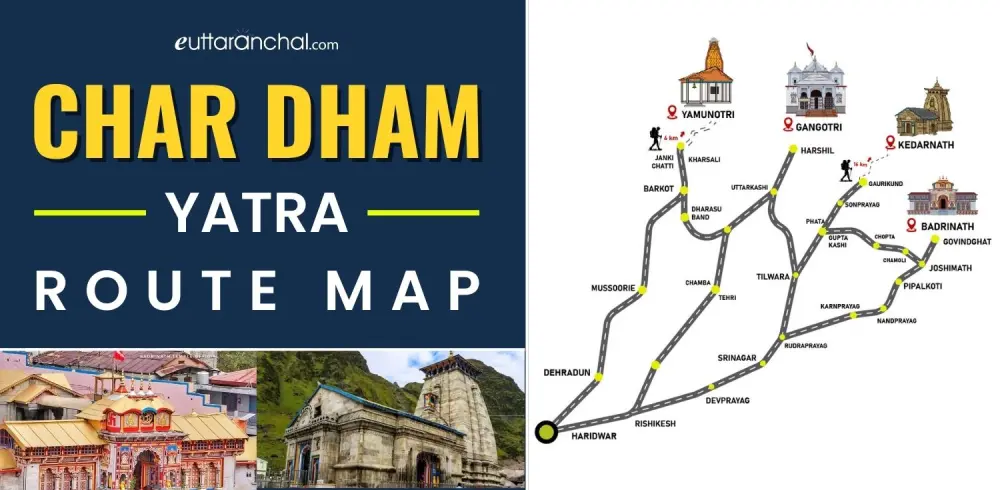
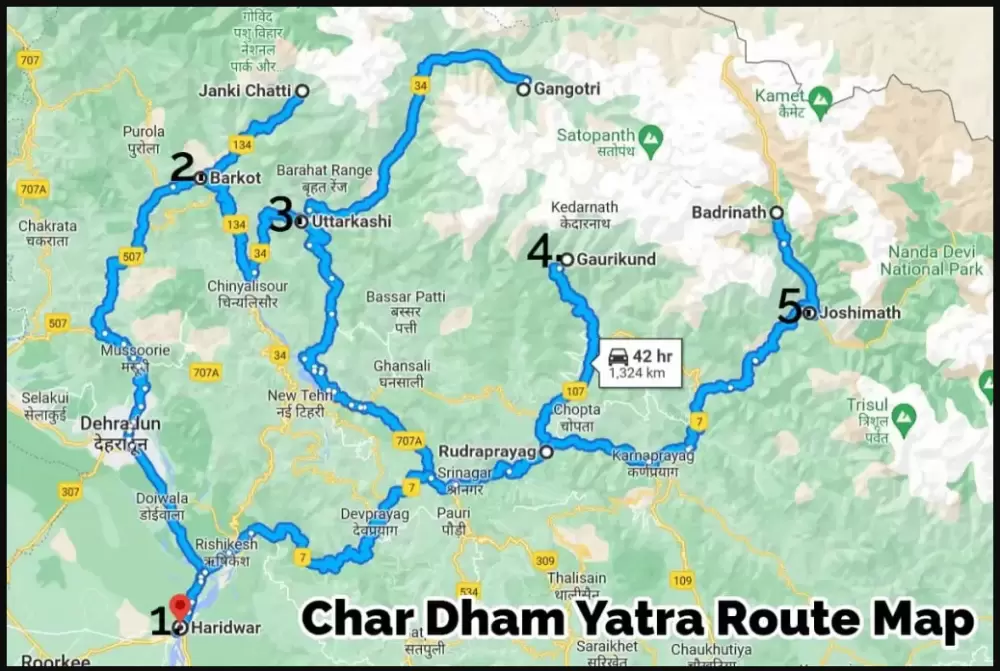
The traditional Char Dham Yatra route in Uttarakhand follows a clockwise sequence beginning at Yamunotri, followed by Gangotri, Kedarnath and finally Badrinath. This order has been followed by pilgrims for generations and is also practical for road travel through the Garhwal Himalayas.
Most pilgrims begin the journey from Haridwar or Rishikesh before travelling to each shrine by road. Kedarnath requires an onward trek from Gaurikund, while the remaining three temples are connected by motorable roads.
Distance of Char Dham Temples from Major Towns
| Temple | Nearest Major Town | Approximate Distance |
|---|---|---|
| Yamunotri | Rishikesh | 223 km by road to Janki Chatti, followed by trek |
| Gangotri | Uttarkashi | 105 km |
| Kedarnath | Rishikesh | 223 km to Gaurikund, followed by trek |
| Badrinath | Rishikesh | 298 km |
Important Cities and towns which comes during Char Dham Yatra
Depending on the shrine being visited, the journey passes through several important towns including Dehradun, Mussoorie , Barkot, Uttarkashi, Harsil, Rudraprayag, Guptkashi, Sonprayag, Gaurikund, Chopta , Chamoli, Joshimath, Govindghat, Karnaprayag, Devprayag, Rishikesh and Haridwar. These towns serve as major transit points, accommodation hubs and fuel stops during the pilgrimage.
Char Dham Route at a Glance
| Starting Point | Haridwar / Rishikesh |
|---|---|
| First Dham | Yamunotri |
| Second Dham | Gangotri |
| Third Dham | Kedarnath |
| Fourth Dham | Badrinath |
| Total Duration | 9-12 Days (Typical) |
| Total Distance | Approx. 1,500+ km Round Trip |
Which Temple Requires Trekking?
| Temple | Road Access | Trek Required |
|---|---|---|
| Yamunotri | Up to Janki Chatti | Yes |
| Gangotri | Direct | No |
| Kedarnath | Up to Gaurikund | Yes |
| Badrinath | Direct | No |
How Many Days Are Required for Char Dham Yatra?
Most pilgrims complete the Char Dham Yatra in 9 to 12 days, depending on weather conditions, travel pace, accommodation plans and the time spent at each shrine. Helicopter-based itineraries can significantly reduce travel duration, while road-based pilgrimages generally require more time.
Typical Driving Route from Delhi
| Route | Distance | Approximate Travel Time |
|---|---|---|
| Delhi – Haridwar | 210 km | 6 hours |
| Haridwar – Barkot | 220 km | 7 hours |
| Barkot – Janki Chatti | 36 km | 1.5 hours |
| Uttarkashi – Gangotri | 100 km | 4 hours |
| Rudraprayag – Gaurikund | 74 km | 3 hours |
| Rudraprayag – Badrinath | 160 km | 6–7 hours |
Major Night Halt Locations Along the Route
| Route Segment | Common Halt Location |
|---|---|
| Haridwar to Yamunotri | Barkot |
| Yamunotri to Gangotri | Uttarkashi |
| Gangotri to Kedarnath | Guptkashi / Sitapur |
| Kedarnath to Badrinath | Joshimath / Pipalkoti |
Road Access to Each Char Dham Temple
| Temple | Last Motorable Point | Further Journey |
|---|---|---|
| Yamunotri | Janki Chatti | Approx. 6 km trek |
| Gangotri | Temple accessible by road | No trek required |
| Kedarnath | Gaurikund | Approx. 16–18 km trek (depending on the current route) |
| Badrinath | Temple accessible by road | No trek required |
Why Are Buffer Days Recommended on the Char Dham Route?
Road conditions, weather changes, traffic congestion and occasional route disruptions can affect travel schedules in the Himalayas. Keeping one or two buffer days in the itinerary provides flexibility and helps travellers manage unexpected delays without affecting the overall pilgrimage plan.
Can Pilgrims Visit the Temples in a Different Order?
Yes. Although the traditional sequence is Yamunotri, Gangotri, Kedarnath and Badrinath, some travellers modify the order because of weather conditions, hotel availability, helicopter bookings or road closures. However, most organised Char Dham tours continue to follow the traditional clockwise route.